City-Bay Prep: Why Hamstring Strains Spike Right Now
City-Bay is just around the corner.

If you've been training steadily for a while, this is usually the point where things quietly shift. The long, easy kilometres that got you through winter start giving way to something sharper: tempo sessions, hill reps, a bit more pace than your body's been asked for in months. It's the right instinct. It's also exactly the window where we see hamstring strains start turning up at SA Running Injury Clinic.
There's a reason it happens at this particular stage of training, not earlier and not later, and understanding it is the easiest way to avoid becoming one of the runners who spends the next six weeks managing an injury instead of building toward race day.
Why the hamstring, and why now
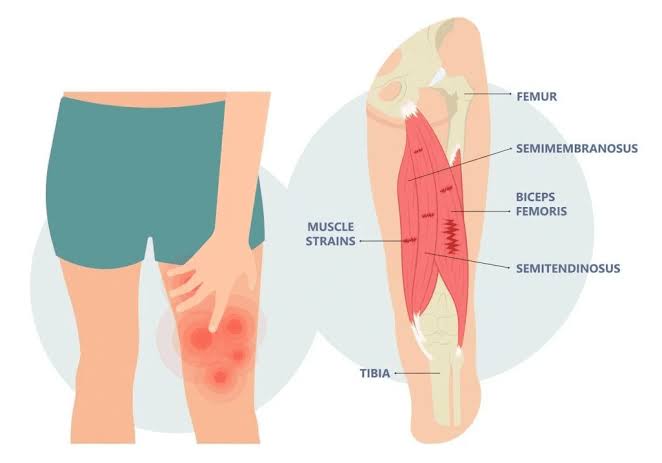
A hamstring strain is a tear, usually partial, in one or more of the muscles running down the back of the thigh. It rarely happens during a slow, steady jog. It happens during the moment the muscle is asked to work eccentrically at speed, lengthening under load while decelerating the leg just before the foot strikes the ground. That's precisely what changes when training shifts from steady-state kilometres to anything involving speed, hills, or sudden pace changes.
The muscle hasn't had time to adapt to that new demand yet. It's been doing one job all winter, and now it's suddenly being asked to do a different one, at higher intensity, often with less recovery between sessions because race day is approaching and there's a temptation to fit more in. That combination, rising intensity and reduced adaptation time, is what makes this exact stretch of training the highest-risk period for a strain, far more than the early, easier weeks of base building.
What it actually feels like
Most people know a hamstring strain when it happens. There's often a sudden, sharp pull or tightness at the back of the thigh, sometimes during a stride, sometimes right at push-off. Milder strains might just feel like ongoing tightness or a dull ache that flares with speed work and settles with rest. More significant ones stop you mid-run, and walking normally afterwards can be uncomfortable for days.
The mistake we see constantly, particularly this close to a race, is people trying to run through the milder version. A hamstring that's been strained and not properly rehabilitated doesn't just heal on its own timeline in the background while you keep training on it. It tends to get reinjured, often worse the second time, which is how a runner who felt "a bit of tightness" in week seven ends up unable to start the race in week twelve.
Where Petros and physiotherapy fit into this
This is one of the injuries our physiotherapist Petros sees regularly as training ramps up before an event like City-Bay, and it's a good example of why SA Running Injury Clinic works as a multidisciplinary team rather than a single-practitioner clinic. A hamstring strain isn't purely a podiatry problem or purely a physio problem. It sits squarely in physiotherapy's territory, and having that expertise onsite means the assessment goes straight to what actually matters: how the muscle is loading, what strength or flexibility deficit let the strain happen, and what the rest of the kinetic chain, hips, glutes, lower back, is or isn't doing to support it.
From a physiotherapy perspective, the early stage of treatment is about calming the injured tissue down and protecting it from being reloaded too soon, which is where the instinct to "push through" does the most damage. Once that's settled, the real work is graded, progressive loading of the hamstring, rebuilding its strength and its tolerance for exactly the kind of eccentric, high-speed demand that caused the strain in the first place. Skipping that step, and just resting until it feels okay before jumping straight back into hill reps, is the single biggest reason hamstring strains become a recurring problem instead of a one-off setback.
How we treat it at SA Running Injury Clinic
 Treatment starts with actually seeing what's going on, using computerised gait analysis to check how you're loading through your stride and whether anything in your mechanics, hip control, stride pattern, foot strike, contributed to the strain in the first place. That assessment shapes everything that follows, rather than defaulting to the same generic advice for every runner who walks in with a sore hamstring.
From there, treatment usually combines a few things. Dry needling and lower limb mobilisation are often used early to help ease muscle tightness and improve movement through the hip and thigh while the tissue is still settling. Strapping can provide short-term support during this phase, particularly if you're easing back into light training. The core of recovery, though, is a proper rehabilitation and strengthening program, built around progressively loading the hamstring back up to full running demand rather than rushing straight back into speed work. Alongside that, we look at training modification, adjusting your sessions in the lead-up to City-Bay so you keep building fitness without reinjuring the muscle before it's ready.
For strains that are proving stubborn or slow to settle, extracorporal shockwave therapy can help stimulate the tissue's healing response, and prolotherapy is another option we can discuss where ongoing instability in the area is part of the picture. Most hamstring strains don't need either of these, but it's useful to know they're there if a simpler approach isn't cutting it with race day approaching.
What to actually do in the next six weeks
If you're feeling any tightness or pulling sensation at the back of the thigh right now, the smartest move is getting it looked at before your next hard session, not after. A strain caught early is usually a short interruption. A strain that gets run through repeatedly can turn into something that costs you the race entirely.
If you haven't felt anything yet, this is still worth paying attention to. As training intensity increases over the coming weeks, make sure any speed or hill work is introduced gradually rather than all at once, and don't skip the strength and mobility side of training in favour of just running more. It's the part that actually protects you.
Feeling tightness, or want to make sure your training is set up to get you to the start line healthy?
Book an assessment with SA Running Injury Clinic and get seen by our multidisciplinary team, including physiotherapy, before a minor niggle turns into a missed race.