Knee Osteoarthritis Treatment Adelaide: What Really Helps?
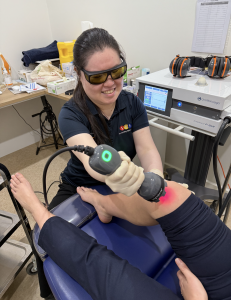
Knee pain can slowly change the way you live. Stairs become harder, your morning walk gets shorter, getting out of a chair takes more effort, and activities you once enjoyed start to feel like something you need to avoid.
If you're looking for knee osteoarthritis treatment in Adelaide, there is something important to know: being diagnosed with knee osteoarthritis does not automatically mean giving up exercise or heading towards surgery.
In fact, movement and appropriately prescribed exercise are central to current Australian recommendations for managing knee osteoarthritis.
At SA Running Injury Clinic, our physiotherapist Petros works alongside our podiatry team to look at more than the painful knee. We assess strength, movement, gait and lower-limb mechanics to help you understand what may be contributing to your symptoms and what you can actively work on.
What Is Knee Osteoarthritis?
Knee osteoarthritis, often shortened to knee OA, is a chronic joint condition that can cause pain, stiffness, swelling and reduced function.
It becomes more common with age, particularly from around 45 onwards, but the way it affects people varies considerably.
Some people notice stiffness when they first stand up. Others struggle with stairs, longer walks, squatting or exercise. Symptoms can also fluctuate, with better periods followed by painful flare-ups.
Importantly, an osteoarthritis diagnosis doesn't tell us everything about what you can or cannot do.
That is why good knee osteoarthritis treatment should focus on the person, not simply an X-ray.
Knee Osteoarthritis Treatment in Adelaide: Where Do You Start?
For many people, the first step is understanding what is actually limiting their movement.
Is the knee becoming weaker because pain has reduced your activity? Is your walking pattern changing? Are certain activities placing more demand on the knee than it can currently tolerate? Could your foot mechanics or footwear be influencing load through the lower limb?
These are questions that cannot be answered by looking at the knee in isolation.
Current Australian guidance recommends a comprehensive, person-centred assessment followed by an individualised management plan.
At SA Running Injury Clinic, this is where having both physiotherapy and podiatry within the team becomes particularly valuable.
Physiotherapy for Knee Osteoarthritis
Exercise is one of the most important parts of knee osteoarthritis treatment.
However, that doesn't mean simply being handed a generic sheet of knee exercises.
Our physiotherapist Petros can assess your current strength, mobility and functional capacity before developing an exercise approach around what you actually need to do.
For one person, the goal might be climbing stairs comfortably. For another, it could be getting back to longer walks, golf, the gym or recreational sport.
Treatment can therefore involve strengthening the muscles supporting the knee and lower limb, gradually improving mobility and progressively increasing what the knee can tolerate.
Current Australian guidance specifically recommends physical activity and exercise tailored to the individual's needs, preferences and goals. It also reassures people with knee OA that exercise is safe and can improve pain and function.
Should You Exercise With Knee Osteoarthritis?
Yes, in most cases, appropriate exercise is encouraged.
One of the biggest misconceptions around knee arthritis is that exercise will simply "wear the knee out" faster.
Understandably, that fear can lead people to become less active. But over time, doing less can also mean losing strength, fitness and confidence in movement.
The Australian Knee Osteoarthritis Clinical Care Standard specifically advises that exercise does not damage the knee and recommends regular physical activity to help manage pain and improve function.
That doesn't mean ignoring significant pain or pushing through every symptom.
Instead, the amount and type of exercise can be adjusted to suit your current capacity and gradually progressed as you become stronger.
Why Our Podiatrists May Also Be Involved
The knee doesn't work by itself.
Every time you walk, your feet, ankles, knees and hips work together. That means assessing knee pain sometimes requires looking further down the chain.
Our podiatrists can assess your gait, footwear and foot mechanics to determine whether they may be influencing how forces travel through your lower limb.
For some people, footwear changes may be enough. For others, additional support may be considered.
This is one of the advantages of receiving knee osteoarthritis treatment at SA Running Injury Clinic. Petros can focus on strength, mobility and exercise while our podiatrists can assess the mechanical factors occurring below the knee.
It gives us a much more complete picture.
Can Orthotics Help Knee Osteoarthritis?
This is an important question, and the answer isn't simply yes or no.
Custom orthotics do not cure knee osteoarthritis, and not everyone with knee OA needs them.
However, where foot mechanics or specific loading patterns are contributing to a person's symptoms, a podiatrist may consider whether orthotic support could help modify how forces are distributed through the foot and lower limb.
The decision should always be individual.
At SA Running Injury Clinic, we don't prescribe orthotics simply because someone has arthritis. We assess whether there is a mechanical reason they may form a useful part of that person's overall management plan.
Do You Need an X-Ray or MRI?
Not necessarily.
This surprises many people.
For adults over 45 with symptoms and clinical findings typical of knee osteoarthritis, current Australian guidance says the diagnosis can often be made through a comprehensive clinical assessment without routine imaging. Imaging may still be appropriate when the diagnosis is uncertain, symptoms are atypical or another condition is suspected.
More importantly, your scan doesn't tell us everything about your experience.
How far can you walk? Can you manage stairs? What activities have you stopped doing? How strong is the leg? How does the knee respond to movement?
Those questions matter when developing a treatment plan.
Does Knee Osteoarthritis Always Lead to Surgery?
No.
Joint replacement surgery is an important option for people with severe, persistent functional impairment when appropriate non-surgical treatment has not provided sufficient improvement.
But it isn't inevitable simply because you have been diagnosed with knee OA.
The Australian Commission reports that nine out of ten people with knee osteoarthritis can manage without needing joint replacement surgery. Current standards recommend optimising non-surgical management, including an appropriate period of physical activity and exercise, before joint replacement is considered.
That makes good conservative management incredibly important.
Physio + Podiatry: Looking Beyond the Painful Knee
There isn't one exercise, shoe, orthotic or treatment that is right for everybody with knee osteoarthritis.
That is exactly why we like having different disciplines involved.
With Petros in physiotherapy alongside our podiatrists, we can assess different pieces of the same puzzle.
Your treatment plan may include:
- Individualised strength and exercise rehabilitation
- Mobility and functional training
- Activity and load management
- Gait and lower-limb assessment
- Footwear recommendations
- Custom orthotics when clinically indicated
Not everyone will need every treatment. The aim is to identify what is relevant to your knee, your movement and your goals.
Don't Let Knee Arthritis Make Your World Smaller
This may be the most important part.
Knee osteoarthritis can gradually make people do less without them even realising it.
You stop taking the longer route. You avoid the stairs. The weekend walk disappears. Eventually, activities that used to be normal start to feel impossible.
But movement is not the enemy.
Australian clinical guidance encourages people with knee osteoarthritis to remain physically active because doing so can improve pain, strength, mobility and overall function.
The key is finding the right starting point.
Looking for Knee Osteoarthritis Treatment in Adelaide?
If knee pain or stiffness is beginning to limit what you can do, you don't necessarily need to wait until it becomes severe.
A thorough assessment can help identify what is contributing to your symptoms and where treatment should begin.
At SA Running Injury Clinic, our physiotherapist Petros works alongside our podiatry team to provide a broader approach to knee osteoarthritis treatment, combining exercise and rehabilitation with assessment of gait, footwear and lower-limb mechanics where appropriate.
Because the goal isn't simply to treat an arthritic knee.