
Ankle Sprains Glenside
Treatment for Ankle Sprains Glenside
Factors Associated with Ankle Sprains
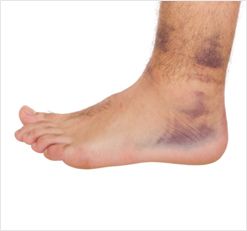
- Was your ankle injured during sport after landing awkwardly on another player’s foot?
- Did you twist your ankle while walking or running on an uneven surface?
- Did you notice a popping or cracking sound at the time of injury?
- Are you experiencing ankle stiffness, swelling, or bruising that makes walking uncomfortable?
SA Running Injury Clinic regularly assesses ankle sprain presentations involving the ligaments that stabilise the ankle joint. Ankle sprains can occur when the ankle moves beyond its normal range during activities such as running, walking, or landing from a jump.
As mentioned above, it is caused usually by a runner or walker misjudging a step, or landing on an uneven surface. In sport, it is from changing direction or landing on another competitor’s foot.
Ankle Sprains Treatment
Ankle sprains commonly occur after an awkward step while walking or running, landing on an uneven surface, or during sporting movements such as changing direction or landing on another player’s foot.
Following an ankle sprain, some individuals may experience swelling, bruising, stiffness, and discomfort with walking or standing, with temporary support such as strapping, crutches, or a walking boot sometimes required. In more significant injuries, fractures may also need to be ruled out. Some people may continue to experience ankle instability, stiffness, or ongoing discomfort following an ankle sprain, including presentations associated with Sinus Tarsi Syndrome.
Rehabilitation for ankle sprains may involve the following phases of care and activity progression:
Phase One:
- Initial care may include strategies aimed at managing swelling and supporting early recovery through RICER.
- Rest
- Ice
- Compression
- Elevation
Phase Two:
- Exercises aimed at supporting ankle range of motion
- Massage
- Targeted stretching exercises to support mobility
Phase Three:
- Strengthen Muscle
- Targeted strengthening exercises for the lower leg and foot
Phase Four:
- Assessment and management of foot posture and biomechanics
- Altered foot mechanics, such as excessive inward or outward rolling of the foot, may be associated with ankle sprains and Sinus Tarsi Syndrome presentations.
Phase Five:
- Exercise-based rehabilitation aimed at supporting balance, coordination, and sport-specific movement
- Exercises designed around sport-specific movement patterns
Ankle Rehabilitation Options Including the EXO-L Brace
For some runners and active individuals, ankle sprains may lead to ongoing ankle instability or difficulty returning to activity. The EXO-L ankle brace is a custom 3D-printed support designed to provide additional ankle support during movement while maintaining comfort and day-to-day mobility. At SA Running Injury Clinic, the brace may be considered as part of an ankle rehabilitation and support program.
Custom Foot and Ankle Support Options
The EXO-L ankle brace is produced using a custom 3D scanning and printing process to provide an individualised fit compatible with many athletic shoes. Designed for active individuals and sporting participation, the brace aims to provide additional ankle support while allowing day-to-day movement. Eligible patients may be able to claim the brace through private health insurance podiatry orthotic cover. Rehabilitation programs may also involve strengthening exercises, movement retraining, and footwear advice where clinically appropriate.
Sprained Ankle Care at SA Running Injury Clinic

Residents of nearby suburbs including North Adelaide, Eastwood, Walkerville, Unley, Prospect, St Peters, Glenside, Parkside, Norwood, Burnside, Brompton, Thebarton, Mile End, Fullarton, Myrtle Bank, Glenunga and Highgate can access sprained ankle treatment in Adelaide at SA Running Injury Clinic.
SA Running Injury Clinic offers online and phone bookings for appointments at our two clinic locations.